
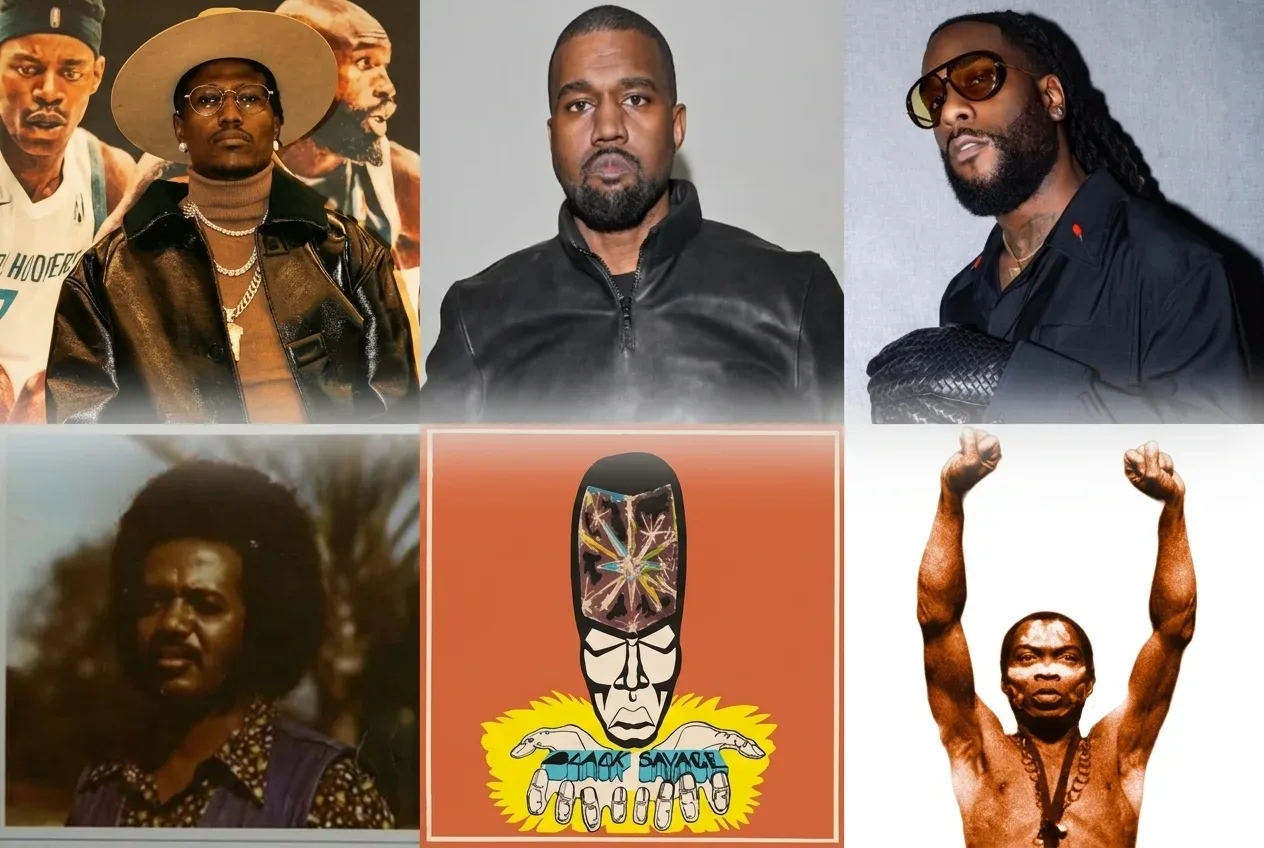
What happens when a song your parents danced to becomes the soundtrack to your TikTok videos? From Octopizzo’s revival of Slim Ali to Tems’ Grammy-winning reinvention of a Nigerian classic and Ye’s sampling of a haunting Kenyan melody, Africa’s musical treasures are finding new grooves, younger audiences and a second shot at immortality.
There is something rather fascinating about a song that refuses to grow old. It may disappear from radio playlists, lose its place in the clubs and gradually fade from the musical conversations of younger generations, only to return decades later wearing a completely different outfit. That was a recent case witnessed in the interpolation of Slim Ali’s and the Hodi Boys tune You Can Do It by Octopizzo that was trending on social media decades after the original song was produced. Indeed, the song’s feel was timeless and so was the remake that related with generations across board.
Suddenly, a melody that once entertained parents and grandparents is commanding attention on TikTok, streaming platforms, dance floors and international charts. The lyrics may remain familiar, but the bass is heavier, the drums are faster, the production is slicker and the audience is considerably younger.
Kenyan rapper Octopizzo knows something about this musical resurrection. His 2014 track Something for You has recently attracted renewed attention, with younger listeners rediscovering a song that connects contemporary hip-hop with the golden era of Kenyan funk.
The track borrows from You Can Do It, a 1970s classic by Slim Ali and the Hodi Boys, a group whose music was once a staple of Kenya’s dance floors. Produced with the creative input of Just a Band’s Blinky Bill, the modern interpretation transformed an old-school groove into a contemporary hip-hop experience.
For listeners who grew up with the original, it was a nostalgic reminder of a musical era when Kenyan bands were experimenting with funk, soul, rumba and African rhythms. For younger audiences, it was simply a good song with an infectious beat. And that is precisely the magic of musical reinvention.
Across Africa, musicians are increasingly reaching into the archives, borrowing melodies, sampling forgotten recordings and interpolating familiar lyrics to create records that appeal to modern audiences. Some are paying homage to their predecessors, others are introducing forgotten musical treasures to a new generation, while a few are simply demonstrating that good music has no expiry date.
To understand the excitement surrounding these musical reincarnations, one must appreciate the richness of Kenya’s earlier music industry. Long before Genge, hip-hop, gengetone and contemporary Afro-pop became household sounds, Kenyan musicians were already experimenting with different musical identities.
The 1960s introduced Twisti, a dance craze inspired by American rock and roll but adapted to local tastes. John Nzenze, Daudi Kabaka and Fadhili Williams were among the musicians who helped shape this period. Nairobi’s Equator Sound Studios became an important recording centre, bringing together musicians and developing a distinctly East African popular sound.
Kabaka’s Helule Helule, recorded with George Agade in 1966, is perhaps one of the most remarkable examples of Kenyan music finding an international audience. British pop group The Tremeloes adapted the Swahili chorus, added English verses and released their version in 1968. It peaked at number 14 on the UK Singles Chart, spending nine weeks on the chart. Think about that for a moment. A Kenyan Swahili song had crossed continents and found itself competing for attention on British pop charts at a time when the Kenyan music industry was still finding its feet.
The story of Malaika is equally fascinating. The timeless Swahili love song, popularised internationally through Fadhili William’s recording, became one of East Africa’s most recognisable musical exports. Its authorship and origins have been debated, with historical accounts also identifying Lucas Tutu as its composer.
Its international journey included interpretations by Miriam Makeba and Harry Belafonte, Pete Seeger, the Swedish group Hep Stars and, much later, the German disco group Boney M, whose version appeared on their 1981 album Boonoonoonoos. Beninese superstar Angélique Kidjo also recorded her own interpretation.
Although these are largely covers rather than modern samples, they demonstrate an important point: African melodies have long possessed the ability to cross cultural and linguistic boundaries. The next generation of musicians is simply finding new ways to exploit that musical inheritance.
If Twisti gave Kenya an early dance-floor identity, Benga gave the country a sound that would become unmistakably its own. Driven by energetic guitar work, infectious bass lines, rhythmic percussion and storytelling, Benga became particularly influential among Luo musicians and audiences in western Kenya.
The likes of D.O. Misiani, Victoria Kings, Shirati Jazz, George Ramogi, Owino Misiani and other bandleaders built a musical culture that travelled beyond the villages and towns where it originated. Their records were not merely entertainment. They documented relationships, politics, social changes, community life and everyday experiences.
One particularly interesting example is Kiseru, a Luo song by D.O. Misiani and Shirati Jazz. Its legacy grew wings and is often associated with the wider East African repertoire heard in Nairobi Night, the soukous medley associated with Congolese guitarist Lokassa Ya Mbongo and Soukous Stars.
The medley brought together East African musical references, including songs associated with Tabora Jazz Band and Western Jazz Band, and presented them through the energetic guitar arrangements and dance rhythms of Congolese soukous.
It illustrates how musical ideas moved between Kenya, Tanzania and the Democratic Republic of Congo long before the internet made cross-border collaborations commonplace. This was an early form of musical recycling, with regional musicians borrowing from one another, transforming familiar melodies and giving them a different dance-floor identity. The distinction is important: Not every musical borrowing is a direct sample. Sometimes it is an adaptation, a cover or an interpolation of an existing melody.
Perhaps one of the most extraordinary examples of Kenyan musical heritage finding its way into contemporary international hip-hop is the story of Kothbiro. Originally recorded in 1976 by Nairobi-based Afro-rock group Black Savage, the composition is credited to James Mbarack Achieng. The song later became widely associated with the late Ayub Ogada, who recorded his own celebrated interpretation using the traditional nyatiti.
Ogada’s version gained international recognition, particularly after its inclusion in the soundtrack of the 2005 film The Constant Gardener.
But the story did not end there. In 2018, American rapper Kanye West, now known as Ye, sampled the Kothbiro recording on Yikes, a track on his album ye. The haunting vocal passages and distinctive African musical character were woven into a contemporary hip-hop production.
The development attracted international attention, and Ogada and Mbarack Achieng received songwriting credits alongside the other contributors.
For Kenya, it was a significant moment. A sound rooted in traditional Kenyan musical expression had found a place on a major international hip-hop album. The journey from the nyatiti-inspired atmosphere of Kothbiro to the contemporary production of Yikes demonstrated that African musical heritage could be incorporated into some of the world’s biggest musical productions without losing its distinctive character. It also raised an interesting question: How many other Kenyan musical treasures remain undiscovered in old recording archives?
While Kenya has its own compelling examples, Nigeria has arguably become one of the most exciting laboratories for the revival of older African music.
The influence of Afrobeat pioneer Fela Anikulapo Kuti on contemporary Afrobeats is particularly difficult to ignore. Fela’s politically charged compositions, distinctive horn arrangements, infectious percussion and rebellious musical personality have influenced generations of musicians.
Wizkid’s Jaiye Jaiye, featuring Femi Kuti, drew from Fela’s 1972 classic Lady. Wizkid also revisited Fela’s musical vocabulary in Sweet Love, which references Shakara.
Burna Boy has similarly incorporated Fela’s legacy into his contemporary sound. His 2019 song Collateral Damage draws from Sorrow, Tears and Blood, while his music has repeatedly referenced the Afrobeat pioneer’s compositions.
But perhaps one of the most successful modern examples of African musical nostalgia is Tems’ Love Me JeJe. Released in April 2024, the song revisited Seyi Sodimu’s 1997 Nigerian classic of the same name, featuring Shaffy Bello.
Tems retained the familiar lyrical hook while introducing a contemporary Afrobeats and R&B arrangement. The result was a romantic, easy-listening record that connected listeners who remembered the original with a generation discovering it for the first time. It was more than a nostalgic experiment. At the 67th Grammy Awards in 2025, Tems won Best African Music Performance for the song.
Another interesting example is Flavour’s Nwa Baby (Ashawo Remix), which draws from Cardinal Rex Jim Lawson’s highlife classic Sawale. The contemporary version transformed an older highlife melody into an energetic dance record.
Ayra Starr also tapped into African musical history with Sare, drawing from the Lijadu Sisters’ 1979 song Orere Elejigbo. Her 2023 hit Sability also drew from Awilo Longomba’s Congolese dance classic Coupé Bibamba.
These are not isolated experiments. Adekunle Gold’s Rodo revisits the traditional Yoruba musical repertoire associated with Musiliu Haruna Ishola, while ID Cabasa’s Olufunmi Reimagined brought together contemporary performers Fireboy DML, Joeboy, BOJ and ODUMODUBLVCK to revisit Styl-Plus’ much-loved 2003 hit.
The latter is particularly interesting because it demonstrates that the revival movement is not limited to music from the 1960s and 1970s. Even records from the early 2000s are now becoming nostalgic material for a new generation.
The phenomenon is not confined to African musicians borrowing from their predecessors. Some of the continent’s most celebrated recordings have become building blocks for international pop, hip-hop and R&B.
Cameroonian saxophonist Manu Dibango’s Soul Makossa, released in 1972, is one of the most influential African recordings in international popular music. Its famous vocal refrain and infectious instrumental arrangement have appeared in numerous international productions.
Michael Jackson’s 1982 hit Wanna Be Startin’ Somethin’ interpolated elements of Soul Makossa, while Jay-Z’s Face Off also sampled the recording.
The story continues with Ethiopian music. The Weeknd sampled Aster Aweke’s Y’shebellu on False Alarm, while Aminé’s 2025 title track 13 Months of Sunshine sampled Aweke’s Nafkot. Zambian music also found a new international audience when Tyler, the Creator sampled Ngozi Family’s 1977 recording Nizakupanga Ngozi on NOID, from his 2024 album Chromakopia.
These examples show that African music is not merely supplying inspiration for African performers. It is contributing to the sound of international pop culture. There is an important technical distinction that often gets lost whenever musicians are accused of copying older records. Sampling involves taking a portion of an existing sound recording and incorporating it into a new composition. It could be a vocal, guitar riff, drum pattern or instrumental passage. Interpolation involves recreating or performing an identifiable part of an existing composition, such as its melody or lyrics, rather than lifting the original recording. A cover, meanwhile, is a new performance of an existing song, usually retaining its central composition and identity.
These distinctions matter because the examples discussed here are not all the same. Tems’ Love Me JeJe is an interpolation of Sodimu’s original, while Kanye West’s Yikes uses a sample from Black Savage’s Kothbiro. The Tremeloes’ Helule Helule is an adaptation of Daudi Kabaka’s original.
They also have different copyright implications. Sampling and interpolation can require permissions and appropriate songwriting or publishing credits. The revival of old music should therefore also be accompanied by proper recognition and compensation for the original creators and rights holders.
Perhaps the most exciting part of this development is how social media has changed the lifespan of music. A song no longer has to remain on radio rotation to survive. TikTok challenges, Instagram reels, streaming playlists and online music communities can resurrect a record years after its original release.
Octopizzo’s Something For You is a good illustration of this. Its renewed popularity introduces younger listeners to Slim Ali and the Hodi Boys, while reminding older audiences of the creativity that existed in Kenya’s music industry decades ago.
There’s an opportunity here for Kenyan producers, DJs and contemporary musicians to revisit the country’s enormous musical catalogue.
Imagine a Gengetone producer discovering a forgotten D.O. Misiani guitar riff, an Afro-pop singer reworking a Gabriel Omolo classic, or an Amapiano producer transforming a vintage Kenyan funk record into a dance-floor anthem.
Kenya’s Benga maestros, Twisti pioneers, Afro-soul musicians and Congolese-influenced bands left behind a catalogue that deserves more than occasional nostalgia shows. Their music is a resource for creative experimentation, cultural preservation and commercial reinvention.
But the responsibility is equally important. The original musicians must receive recognition, publishing rights must be respected and younger performers should understand the stories behind the sounds they are borrowing.
Ultimately, musical reinvention is not about suggesting that yesterday’s music was better or that today’s musicians lack originality. It is about recognising that music is a continuous conversation between generations.
Fela Kuti, Slim Ali, Daudi Kabaka, Ayub Ogada, Manu Dibango and the many other pioneers did not necessarily create their music with TikTok or international streaming charts in mind. Yet their compositions continue to find audiences in places and generations they could never have imagined or reached.
And perhaps that is the greatest compliment a musician can receive: To make a song so memorable that, decades later, someone discovers it, falls in love with it and decides to give it another life. Great music never really leaves. It simply waits for the right generation to press play again.