
Understanding the strange, fascinating and sometimes amusing ways of the human mind!
People use the word syndrome quite freely in everyday conversation. But how much do we really know about syndromes?
What exactly is a syndrome? How many are there? What different types exist? Where did they originate? Are there famous people who have been associated with them? And, perhaps most importantly, can we recognise their influence in our everyday lives?
Welcome to THE SYNDROME OF THE DAY!
We are embarking on a fascinating journey into the world of syndromes. Every day, we will introduce a different syndrome, explore its origins, explain what it means, look at some interesting historical cases and discover how it might relate to our everyday experiences.
Some will surprise you, some will make you think, and others might even make you laugh!
Our next stop on this exciting journey is a particularly interesting one:
EPISODE 2: THE MESSIAH COMPLEX
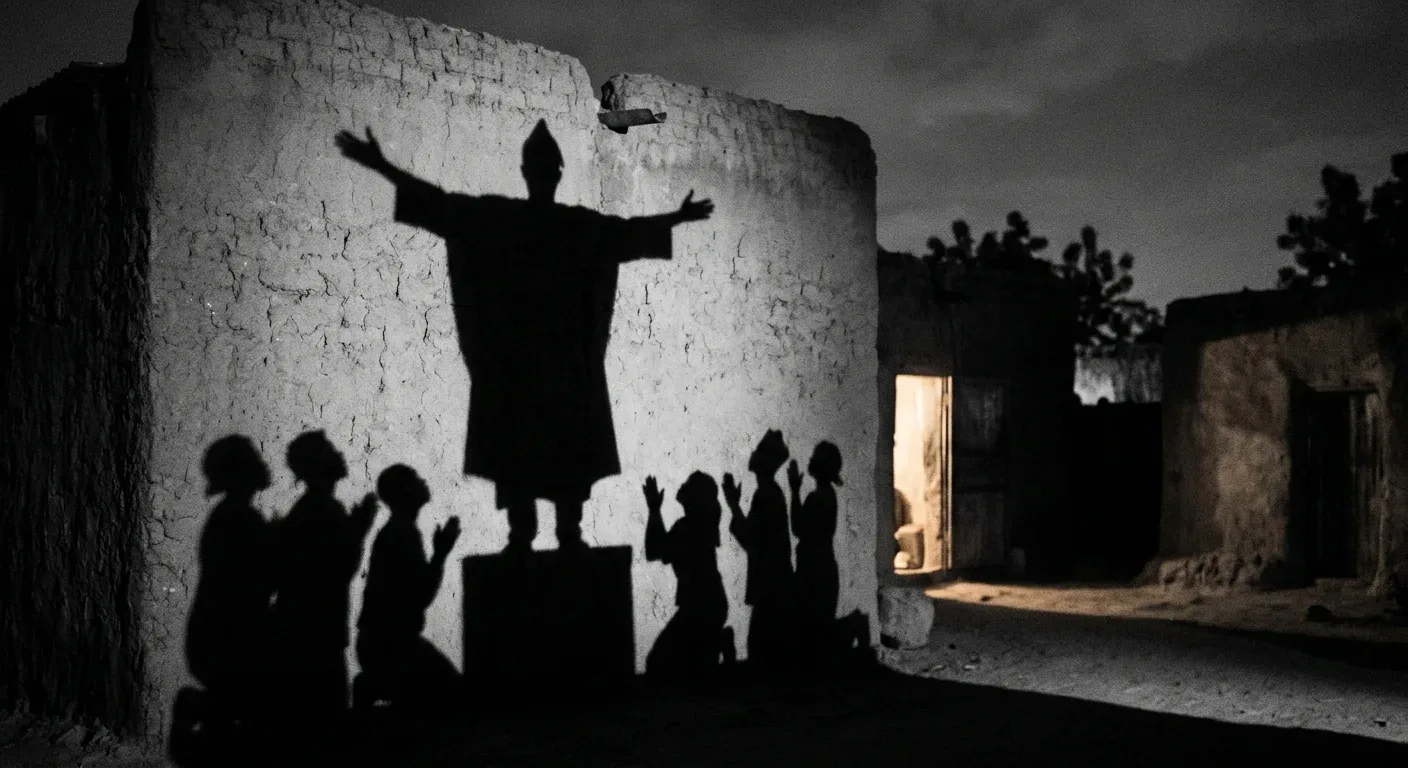
When someone believes they are the world’s appointed saviour!
Have you ever met someone who believes that everybody needs them, that they alone have the answers to everyone’s problems, and that without them, the world would fall apart?
Someone who constantly wants to rescue people, solve every problem, take charge of every situation and be celebrated for their sacrifices?
Or someone who believes that they are destined to save a family, an organisation, a community or even an entire nation?
Well, ladies and gentlemen, welcome to the fascinating world of the Messiah Complex!
1. What does it mean?
The Messiah Complex is a popular psychological expression used to describe a pattern of thinking in which someone develops an exaggerated belief that they have a special mission to rescue, save or deliver other people from their problems.
In simple language, imagine someone who believes that they are the only person capable of fixing everything. They feel personally responsible for everybody’s happiness, success and survival. They may even believe that people cannot function properly without them.
Such a person may constantly:
- Offer unsolicited advice and solutions, even when nobody has asked.
- Take responsibility for problems that are not theirs to solve.
- Feel offended when people reject their help.
- Believe that they are indispensable.
- Expect appreciation, admiration or loyalty for their sacrifices.
- Present themselves as the only person capable of bringing change.
But here is something interesting!
Wanting to help people is not necessarily a problem. Compassion, generosity, leadership and selflessness are positive human qualities.
The concern arises when the desire to help becomes excessive, controlling, self-centred or driven by an exaggerated sense of personal importance.
The person may genuinely believe they are helping, but their behaviour can sometimes leave others feeling powerless, dependent or suffocated.
An important note: Messiah Complex is not an officially recognised psychiatric diagnosis. It is an informal expression used to describe certain patterns of behaviour and thinking. It should not be confused with a formal diagnosis of a mental health condition.
2. Where did the name come from?
To understand the expression, we must first understand the word Messiah.
The word Messiah comes from the Hebrew word Mashiach, meaning “the anointed one”.
In Jewish tradition, the Messiah is associated with the expectation of a divinely appointed figure who will bring deliverance, restoration and hope.
In Christianity, Jesus Christ is recognised as the Messiah and Saviour.
Over time, the expression Messiah Complex became associated with individuals who appear to see themselves as specially chosen or uniquely destined to rescue others.
In other words, someone begins behaving as though they have been appointed to save the world!
And that is how the expression found its way into everyday discussions about human behaviour.
One important distinction: Having religious faith, believing in a calling or wanting to serve humanity does not automatically mean someone has a Messiah Complex.
The issue is the exaggerated belief in one’s own indispensability or special power to save others.
3. Famous people and cases associated with the Messiah Complex
Throughout history, there have been individuals who presented themselves as uniquely chosen figures with extraordinary missions to save, lead or redeem humanity.
Here are some notable cases often discussed in connection with messianic beliefs:
- Jim Jones: The founder of Peoples Temple, who presented himself as a religious and revolutionary leader. His movement ended in the horrific 1978 Jonestown tragedy in Guyana, where more than 900 people died. His case illustrates the dangers that can arise when claims of extraordinary authority combine with unquestioning loyalty and control over followers.
- David Koresh: The leader of the Branch Davidians in Waco, Texas, who claimed a special religious role and interpreted biblical prophecy in ways that placed him at the centre of his followers’ beliefs. His movement became the subject of the deadly 1993 Waco siege.
- Adolf Hitler: Hitler portrayed himself as a figure destined to restore Germany and repeatedly presented his political mission in terms of historical destiny and national salvation. Some later psychological commentary has described this as messianic self-presentation. This is a historical interpretation, not a clinical diagnosis.
These examples demonstrate how claims of being specially chosen can become dangerous when combined with absolute authority, manipulation, intolerance of criticism and the suppression of independent thought.
It is important to remember that we should not casually diagnose people, religious leaders or politicians simply because they are charismatic, ambitious or convinced of their mission.
4. Can you catch the Messiah Complex? How do you avoid it?
First, you cannot catch the Messiah Complex like a cold, flu or malaria!
It is not an infectious disease.
But here is where things become particularly interesting as we approach the 2027 General Election!
Can we borrow the idea of the Messiah Complex to examine our relationship with political leaders?
Consider this:
- When a politician presents themselves as the only person capable of rescuing the country, should we accept that claim without questioning it?
- When a leader suggests that the country cannot survive without them, are we being asked to believe in leadership or in personal indispensability?
- When politicians portray themselves as the sole solution to problems they have promised to address, should we ask for evidence of their performance?
- When a leader expects unquestioning loyalty because they claim to have sacrificed everything for the people, should accountability take a back seat?
- When someone presents themselves as the nation’s ultimate saviour, do we forget that national development requires institutions, policies, teamwork and citizens?
- When political supporters begin treating their preferred leader as someone who can do no wrong, have we confused leadership with hero worship?
Remember: No single politician owns the destiny of a nation!
5. How do we protect ourselves as we approach the 2027 elections?
Here are a few survival tips for the politically conscious citizen:
1. Never turn a politician into a personal saviour! Appreciate good leadership, but remember that politicians are public servants. They are not messiahs sent to rescue us from every difficulty.
2. Beware of the ‘Only Me Can Do It’ mentality. Whenever someone suggests that the country has no future without them, remember that leadership is about building institutions, not creating personal dependency.
3. Demand evidence, not miracles. Ask for clear policies, realistic plans, measurable targets and demonstrable results. Beautiful campaign speeches are not development.
4. Question your political heroes. Supporting a leader does not mean agreeing with everything they say or do. A leader who expects unquestioning loyalty should make us think carefully about accountability.
5. Don’t confuse charisma with competence. Someone may be an excellent public speaker, entertainer or motivational speaker without necessarily having the skills required to govern.
6. Beware of political personality cults. When supporters begin treating a politician as though they are beyond criticism, ordinary democratic accountability can suffer.
7. Don’t surrender your power to one individual. A country belongs to its citizens, not to one politician, political party or political dynasty.
8. Remember that no leader is bigger than the institutions of the country. Parliament, the judiciary, independent institutions, the media and citizens all have important roles in holding power accountable.
9. Don’t be afraid to change your mind. Supporting a politician yesterday does not mean you must defend every decision they make tomorrow.
10. Remember that citizens are not helpless spectators. We have a responsibility to participate in shaping our country’s future. We do not need a political messiah to think, question, organise and demand better.
WELCOME TO THE SYNDROME OF THE DAY – WHERE EVERY DAY IS A NEW LESSON ABOUT THE HUMAN MIND!