
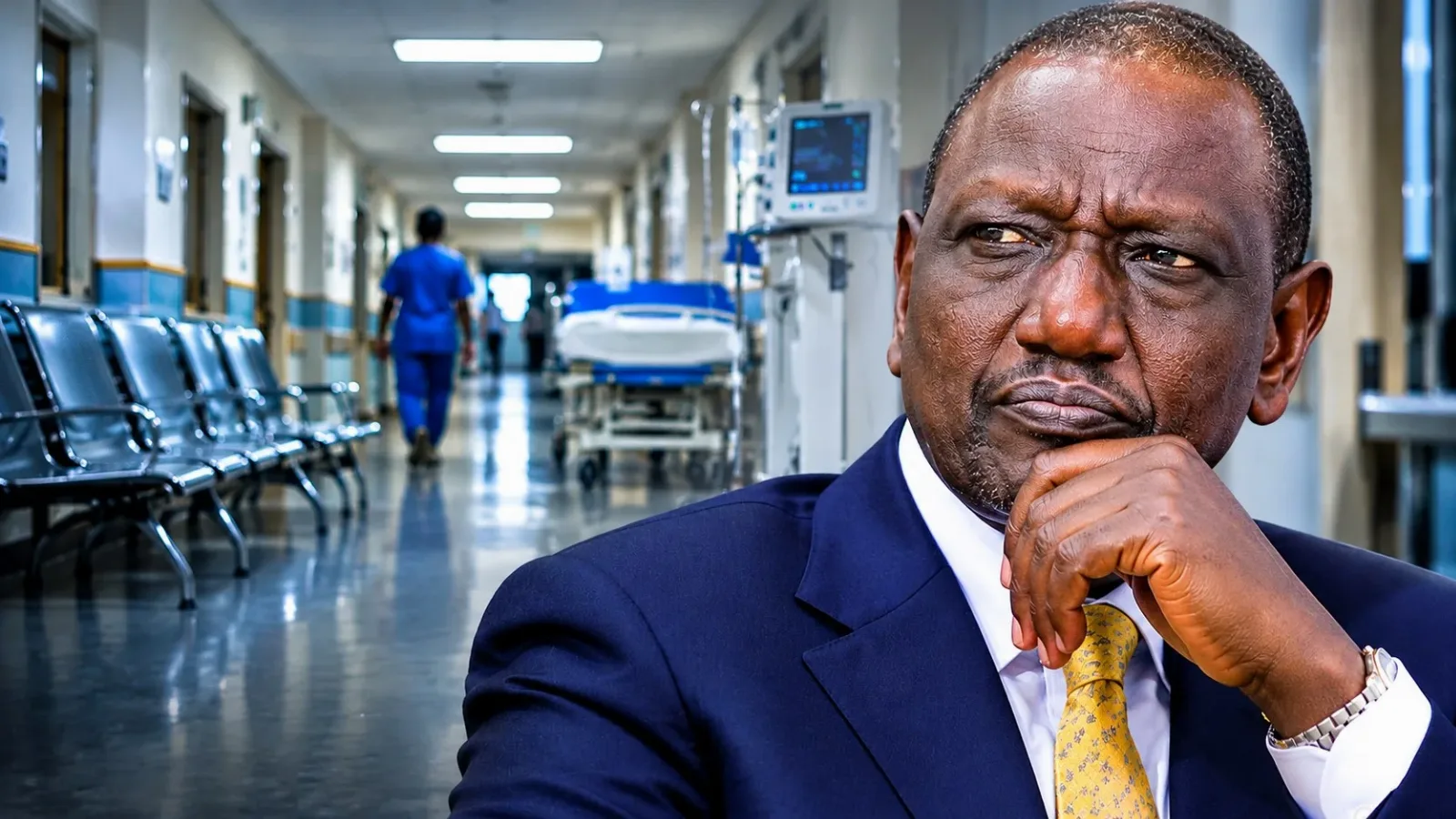
SHA and the price of unprepared reform: Why Kenyans cannot afford a healthcare gamble
In the first three instalments of this seven-part examination of the Ruto presidency, we have interrogated the broken promise of the hustler economy (Part 1: The Betrayal of the Hustler), the administration’s confrontation with a generation demanding accountability (Part 2: The War on Gen Z) and the deepening crisis in public education (Part 3: The Education Crisis). Now, in Part 4, we turn to something far more intimate and consequential: The health of Kenyans. The transition from NHIF to SHA was sold as a transformative step towards universal healthcare. But parliamentary findings on unpaid claims, inherited arrears and delayed reimbursements raise an uncomfortable question: Has the government embarked on a healthcare revolution without putting the machinery in place to deliver it? For millions of Kenyans, this is not an administrative inconvenience. It is a gamble with their health, their savings and, potentially, their lives.
There are few things more frightening than being seriously ill and not knowing whether you can afford treatment.
For a family living on a modest income, a medical emergency can quickly become a financial catastrophe. Savings disappear, assets are sold and relatives are called upon to contribute. An illness that should be a matter of medical attention becomes a struggle for financial survival.
This is precisely the vulnerability that universal healthcare is supposed to eliminate.
President William Ruto’s decision to replace the National Hospital Insurance Fund (NHIF) with the Social Health Authority (SHA) was therefore anchored in an important national objective: Expanding access to healthcare while protecting Kenyans from the crippling financial consequences of illness.
There was little dispute that NHIF needed reform. Questions surrounding its financial management, unequal access, coverage gaps and long-term sustainability had made institutional change necessary.
But replacing an institution is not the same as fixing the problems it was established to address.
And nowhere is the difference between political ambition and administrative preparedness more consequential than in healthcare.
The transition to the Social Health Insurance framework raised immediate concerns about registration, technological reliability, contributions, benefit packages and the processing of claims.
For patients, the new system introduced uncertainty over whether particular treatments would be covered and whether hospitals would actually receive the money required to provide services.
For healthcare providers, the consequences of delayed reimbursements extend well beyond accounting departments.
A hospital that cannot recover money owed for services already provided may struggle to pay suppliers, purchase medicines, maintain equipment and meet its obligations to medical personnel.
Eventually, the financial strain finds its way into the consulting room, the hospital ward and the operating theatre.
And it is the patient who pays the ultimate price.
This is why the findings of Parliament’s Departmental Committee on Health deserve particular attention.
In its December 2025 assessment of SHA’s utilisation of funds and the challenges facing healthcare facilities, the Committee identified serious operational and financial weaknesses, including inherited NHIF arrears, outstanding reimbursements, inconsistent payments and difficulties in claims processing.
Among its recommendations was the urgent settlement of verified NHIF arrears, or the establishment of a clear repayment framework. It also called for enforcement of the 90-day claims settlement requirement and action to address outstanding SHA reimbursements.
These are not minor administrative observations. They go to the heart of whether the new healthcare financing system can be trusted to deliver.
How can a hospital provide reliable services when it does not know when it will be paid for treatment already delivered?
How can a government promise affordable healthcare when facilities providing that healthcare are themselves struggling to remain financially viable?
And how can patients have confidence in a system whose payment and claims processes remain a source of uncertainty?
The difficulties expose, above all, the vulnerability of Kenyans who have little capacity to pay privately.
A wealthy family can seek treatment at another hospital, purchase medicines out of pocket or travel elsewhere for specialised care. A poor household has no such luxury.
For many families, the choice is not between public and private healthcare. It is between receiving treatment and going without it.
The burden is particularly serious for patients requiring long-term treatment, emergency surgery, maternal healthcare and specialised medical services. These are precisely the circumstances in which a functioning social health insurance system should provide the greatest protection.
Instead, uncertainty over coverage, claims and reimbursements risks transferring the financial burden from the State and its institutions back to the very households the reform was supposed to protect.
The government’s response cannot simply be that SHA is a new system and needs time to stabilise.
That may be true of any major institutional reform. But healthcare is not an ordinary government administrative service. People cannot suspend illness while officials resolve technical difficulties. Cancer does not wait for a claims-processing system to stabilise. Emergencies do not respect bureaucratic timelines. And patients cannot be expected to postpone treatment until government systems begin working as intended.
Nor should registration figures and contribution collections be mistaken for evidence of universal healthcare.
The real measures of success are considerably more demanding.
Are patients receiving treatment when they need it? Are hospitals being reimbursed promptly? Are essential medicines available? Are healthcare providers financially sustainable? And, most importantly, are vulnerable households protected from catastrophic expenditure?
These are the questions the government must answer.
It must also provide transparent information about the management of contributions, the financial position of the Authority, the outstanding claims burden and the measures being taken to resolve payment disputes.
A system that collects contributions from citizens must be equally accountable for delivering the benefits those contributions are supposed to secure.
There is, of course, nothing inherently wrong with replacing an outdated healthcare financing model. Indeed, reform was necessary. But ambition without adequate preparation, functional systems and financial discipline is not transformation. It is an invitation to institutional failure.
Universal healthcare is ultimately about people, not institutions. It is about ensuring that a Kenyan’s chances of surviving an illness are not determined by the size of their bank account.
The cardinal sin, therefore, was not the decision to reform NHIF. It was the risk of allowing a necessary reform to become another source of uncertainty for patients and financial exposure for the very healthcare providers expected to make it work.
The public is therefore entitled to judge the NHIF to SHA reform not by the promises made at its launch, the number of people registered or the money collected, but by what happens in hospital wards, clinics and operating theatres.
A healthcare system cannot be declared successful from the podium of a political rally while hospitals struggle to pay suppliers and patients remain uncertain about their entitlements.
When a Kenyan walks into a hospital, the most important question should be what treatment they need, not whether the system will recognise their entitlement or whether the hospital can afford to provide it.
That is the real test of SHA. And it is a test the government cannot afford to fail.
Tomorrow: The Agricultural Quagmire