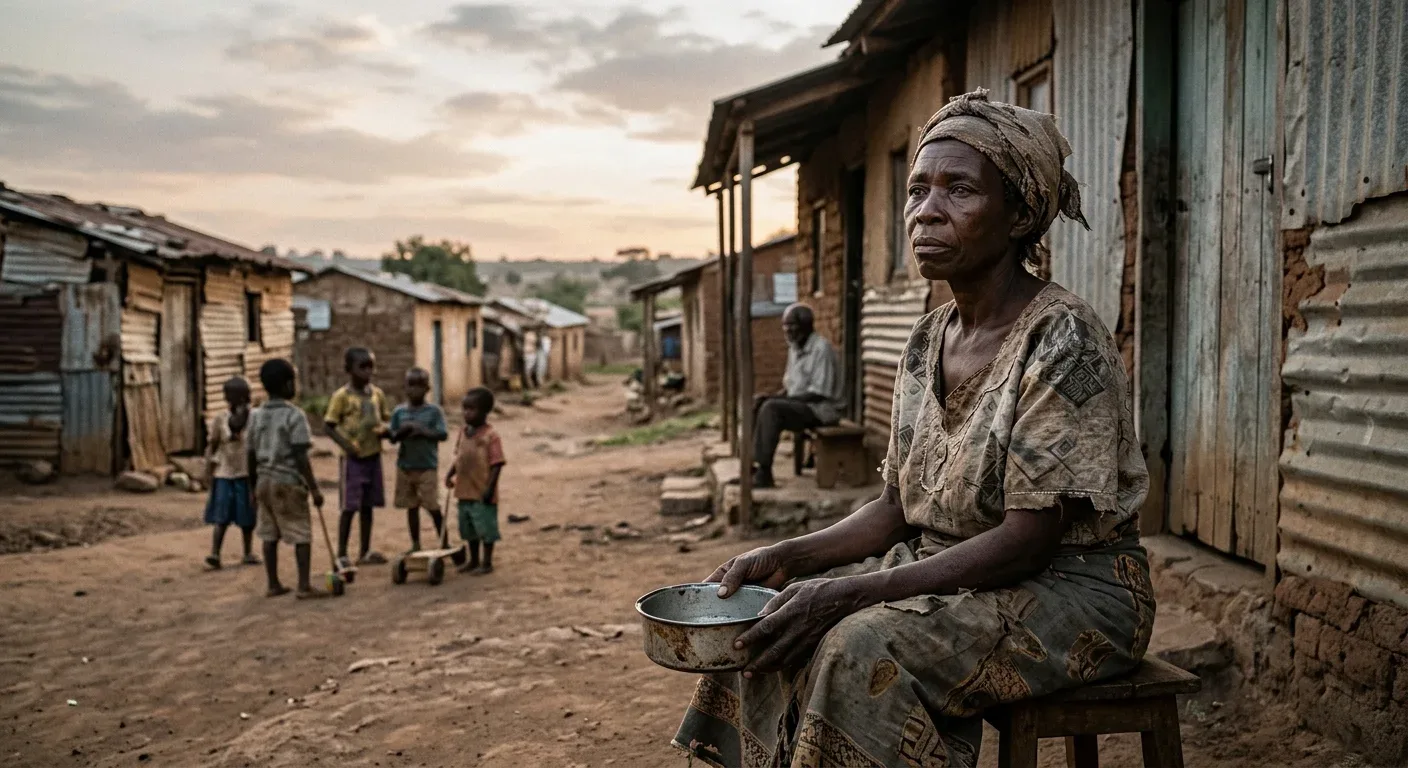
Six in every 10 Africans experience moderate or high levels of lived poverty, with millions struggling to afford basic necessities such as food, clean water, medical care and cooking fuel, a new report by pan-African research network Afrobarometer has found. The findings, based on nationally representative surveys conducted in 38 African countries, further reveal that poverty has continued to worsen over the past decade, with no clear signs of improvement in the latest survey round.
The situation is equally troubling in Kenya, where more than 20.2 million people were living below the national poverty line in 2022, according to the Kenya National Bureau of Statistics (KNBS). In its Kenya Poverty Report 2022, published in January 2024, the statistics agency also established that more than 16 million Kenyans could not afford the minimum food requirements, while approximately 3.6 million were living in hardcore poverty, unable to afford the minimum food basket even if they spent all their income on food.
Released on Wednesday, November 4, 2026, the Afrobarometer report also raises concerns about the direction of poverty on the continent, noting that the situation has shown no signs of improvement following a steady deterioration between 2014 and 2023.
Across 30 countries surveyed in both 2014/2015 and 2024/2025, the proportion of citizens experiencing moderate or high lived poverty increased by 13 percentage points, from 47 per cent to 60 per cent.
The scale of deprivation varies significantly across countries, with Seychelles recording the lowest level of moderate or high lived poverty at seven per cent, while Chad tops the list at a staggering 86 per cent, with Gabon also recording levels exceeding eight in 10 citizens.
The Afrobarometer findings highlight the extent to which poverty has become embedded in the daily lives of ordinary Africans.
An average of 79 per cent of respondents across the 38 countries said they or a member of their household had gone without a cash income at least once in the preceding 12 months. More worryingly, 43 per cent said this happened many times or always.
The report further establishes that 65 per cent of respondents had gone without needed medicines or medical care, while 58 per cent experienced food shortages.
More than half, or 57 per cent, reported going without clean water, while 52 per cent had experienced shortages of cooking fuel.
These figures suggest that poverty in Africa extends beyond conventional income measurements, manifesting in the inability of households to consistently secure even the most basic necessities for survival.
With formal social protection systems failing to adequately cushion vulnerable populations, millions of Africans are increasingly turning to informal support networks to survive.
Nearly half of respondents, representing 47 per cent, said they had sought financial or material assistance from family members during the preceding year to make ends meet.
Another 33 per cent turned to friends or neighbours, while 12 per cent sought help from religious institutions, community organisations or charitable groups.
The growing dependence on relatives, friends and community networks raises questions about the effectiveness of government-led social protection programmes and the capacity of African economies to provide sustainable livelihoods.
For many households, survival increasingly depends not on reliable employment or public assistance, but on the willingness and financial ability of relatives and neighbours to share whatever little they have.
Beyond shortages of food and income, the report identifies a strong relationship between lived poverty and difficulties accessing essential public services.
Citizens experiencing the highest levels of poverty are roughly twice as likely as their better-off counterparts to report difficulties obtaining healthcare, government identification documents and police assistance.
The findings point to a troubling cycle in which those who need public services most are often the least able to access them.
Limited access to healthcare, for instance, can worsen household poverty when families are forced to meet medical expenses out of already inadequate incomes. Similarly, difficulties obtaining official identification documents can create additional barriers to accessing government services and economic opportunities.
Only 40 per cent of the poorest citizens surveyed own bank accounts, compared with 83 per cent among the wealthiest.
However, mobile money appears to be an important exception, with ownership relatively consistent across income groups. Approximately 69 per cent of the poorest respondents own mobile-money accounts, compared with 71 per cent of the wealthiest.
This finding highlights the potential of mobile financial services to bridge some of the financial inclusion gaps that traditional banking systems have failed to address.