Kenya dreams of becoming a first-world economy, but its households and businesses continue to pay some of the highest electricity prices in the region. A new World Bank report traces the problem to opaque power contracts, conflicts of interest and weak oversight in the energy sector. Despite years of audits, investigations and parliamentary inquiries, the cost burden remains on ordinary Kenyans, even as the country’s abundant renewable energy resources offer the promise of cheaper power.
Kenya often prides itself on being one of Africa’s biggest economies, with President William Ruto regularly invoking Singapore as an example of the country’s economic ambitions.
But the President appears to be setting his sights even higher. While campaigning in Kisii on Monday, he declared that Kenya would soon be competing in the same league as global economic powerhouses such as the United States.
Yet beneath these ambitious declarations lies a fundamental contradiction: Kenyans are still paying heavily for one of the most basic drivers of economic growth and everyday life — electricity.
From households struggling with monthly bills to manufacturers battling production costs, expensive power is quietly undermining the country’s economic competitiveness and placing an additional burden on families already grappling with the high cost of living.
A new World Bank report has now put the spotlight on the governance failures behind this problem, identifying opaque electricity contracts, weak procurement systems, conflicts of interest and integrity concerns within the energy sector as major contributors to the high cost of power.
The findings raise uncomfortable questions about how Kenya manages one of its most strategic economic resources, particularly at a time when renewable energy offers an opportunity to expand electricity supply while reducing dependence on expensive power sources.
In its Kenya Economic Update released on November 4, 2026, the World Bank paints a troubling picture of a country that has made considerable progress in connecting households to electricity but has struggled to make that electricity affordable.
According to the report, electricity in Kenya costs businesses an average of 17.5 US cents per kilowatt-hour, equivalent to approximately Ksh22.60. This is nearly 48 per cent more expensive than in neighbouring Uganda, where businesses pay about 11.8 US cents, or Ksh15.20, per kilowatt-hour.
The difference is even more striking when Kenya is compared with Vietnam, where electricity costs between 7.8 and 10.1 US cents per kilowatt-hour.
For households, the situation is equally concerning. The average cost is approximately 22 US cents, or Ksh28.40, per kilowatt-hour, compared with approximately Ksh15.40 in Morocco.
“While Kenya has made impressive gains in expanding access to electricity, power remains costly compared to structural and aspirational peers — more than double the price in Vietnam and close to 50 per cent higher than in Uganda for business users,” the World Bank observes.
These differences are not merely statistics. They have direct consequences for the cost of producing goods, running businesses, processing agricultural products and providing essential services.
Kenyan manufacturers, many of whom depend heavily on regional markets within the East African Community, are particularly disadvantaged when their competitors in neighbouring countries operate with significantly lower electricity costs.
Ultimately, these costs are passed on to consumers through higher prices for goods and services.
The governance problem behind expensive power
At the heart of the problem, according to the World Bank, is the way electricity is procured from Independent Power Producers (IPPs), the private companies that generate and sell electricity to Kenya Power.
The report identifies long-term Power Purchase Agreements (PPAs), weak competition in awarding contracts and inadequate transparency in managing them as major sources of the high cost of electricity.
These agreements often contain provisions requiring Kenya Power to pay generators for making electricity available, even when the power is not fully consumed.
Such arrangements can provide investors with certainty over their returns, but they can also leave consumers paying for electricity that may not actually be used.
More troubling is the World Bank’s finding that only 24 per cent of Kenya Power’s PPAs underwent competitive procurement.
This raises fundamental questions about how the remaining contracts were negotiated, who benefited from them and whether consumers received value for money.
“Governance challenges feed into these higher costs: The absence of a comprehensive and competitive framework for granting PPAs, conflicts of interest, and a lack of transparency in contract management create an environment conducive to higher-cost PPAs,” the report states.
The report also raises concerns about potential conflicts of interest involving public officials responsible for regulating, approving or overseeing electricity generation projects.
In some instances, officials involved in approving projects were subsequently employed by, or became owners of, companies involved in electricity generation.
“For several IPPs, public officials involved in the approval of the projects were later employed by or owned relevant generation companies, raising concerns about conflicts of interest,” the report notes.
This revolving door between public office and private energy companies raises serious questions about whether decisions affecting the cost of electricity are always made in the public interest.
The problem is compounded by the lack of transparency surrounding the ultimate owners of companies doing business with the government.
Although the Business Registration Service (BRS) provided a parliamentary committee with information on the owners and shareholders of IPPs, most of the companies listed foreign corporations as their shareholders.
This made it difficult to establish the individuals who ultimately own or control the companies benefiting from public contracts.
The Companies Act, 2015, requires companies to disclose their beneficial owners to the BRS. However, the World Bank argues that the lack of effective enforcement of these requirements creates opportunities for conflicts of interest and questionable dealings.
The report further points to amendments to some power purchase agreements that were favourable to electricity providers but were not publicly disclosed or accompanied by clear explanations.
In a sector where contracts can commit consumers to substantial payments over many years, such secrecy is particularly troubling.
The thermal power burden
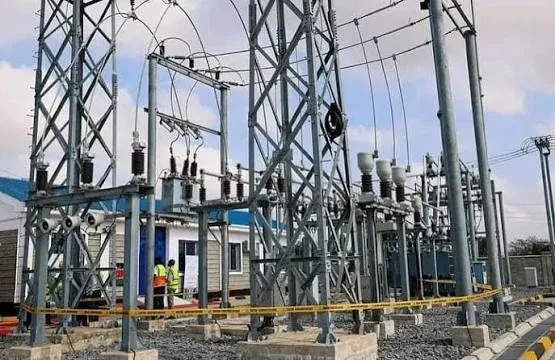
Another major contributor to the high cost of electricity is Kenya’s continued reliance on expensive thermal power plants.
The World Bank identifies thermal generation as the most expensive form of electricity in the country.
These plants are generally contracted to provide additional or flexible power when demand rises or renewable generation is insufficient. However, the cost of electricity purchased from different thermal generators varies significantly.
The problem lies partly in the structure of the agreements.
Many PPAs contain what are known as take-or-pay provisions, under which Kenya Power must make guaranteed payments to generators for keeping their plants available, regardless of how much electricity is ultimately consumed.
These guaranteed payments, commonly referred to as capacity charges, differ considerably from one contract to another.
The World Bank also points to cases involving high-cost thermal plants where ownership has raised concerns about potential conflicts of interest involving former energy regulators and members of the boards of KenGen and the Geothermal Development Company (GDC).
The high costs have prompted repeated calls for the renegotiation of particularly expensive contracts.
For ordinary Kenyans, the consequences are straightforward: The more expensive it is for Kenya Power to purchase electricity, the greater the pressure on the cost of supplying that power to consumers.
The renewable energy paradox
Perhaps one of the most frustrating aspects of Kenya’s electricity crisis is that the country has considerable potential to generate cheaper power from renewable sources.
Kenya has invested heavily in geothermal, wind, hydro and solar energy and has established itself as one of Africa’s leading renewable-energy producers.
Yet the World Bank report suggests that even some renewable energy projects have not escaped the procurement and governance problems affecting the wider electricity sector.
Some projects were contracted without competitive bidding and despite not being included in the country’s Least Cost Power Development Plan (LCPDP), which is intended to guide decisions on the most economical combination of electricity generation investments.
The report notes that negotiated prices for some of these projects were high compared with similar projects in other countries that had been awarded through competitive auctions, including South Africa.
This raises a fundamental policy question: If renewable energy is supposed to help Kenya reduce the cost of electricity, why are consumers still exposed to expensive contracts, some of which were not competitively procured?
The answer lies partly in the distinction between the cost of generating electricity and the cost at which that electricity is purchased.
A country may have abundant sunshine, wind, geothermal resources and hydroelectric potential, but consumers will not automatically benefit from cheaper power if projects are poorly planned, contracts are expensive or procurement is not competitive.
The opportunity is nevertheless significant.
With transparent procurement, proper planning and competitive pricing, Kenya could expand renewable generation, reduce its reliance on expensive thermal plants and progressively lower the cost of electricity for households and businesses.
This would also strengthen the competitiveness of local manufacturers, support agricultural processing and make the economy more attractive to investors.
But that opportunity requires a government willing to put the public interest ahead of the interests of powerful players in the energy market.
A history of warnings, audits and investigations
The World Bank’s latest findings are not the first warning about governance problems in Kenya’s electricity sector.
For years, the Office of the Auditor-General has raised concerns about the management of the sector, including excessive fuel procurement costs that contribute to the high cost of electricity.
The Ethics and Anti-Corruption Commission (EACC) has also investigated suspected irregularities in the sector. In at least one case, the commission recommended the prosecution of several officials over alleged conspiracy to commit an economic crime, abuse of office, conflict of interest and wilful failure to comply with procurement laws.
These investigations point to a problem that has persisted despite repeated public scrutiny.
Between 2021 and 2023, a Presidential Task Force on Power Purchase Agreements was established to examine the high cost of electricity and the contracts between Kenya Power and independent generators.
Among the issues under scrutiny were the cost of power purchased from private generators and the terms of the long-term agreements that had committed Kenya Power to substantial payments.
The task force’s work was followed by a parliamentary inquiry in 2025, as lawmakers sought to establish how the contracts had been awarded and whether the country was receiving value for money.
The parliamentary committee recommended investigations into what it described as the fast-tracked approval of a PPA despite concerns raised by the National Treasury.
The committee’s findings added to an already substantial body of evidence suggesting that the high cost of electricity is not simply a consequence of technical or market conditions, but also of weaknesses in public procurement, oversight and accountability.
The World Bank now brings these concerns together, warning that governance weaknesses have enabled questionable relationships and possible collusive practices involving government institutions, regulators, state-owned energy companies and private electricity producers.
These problems, the bank says, have contributed not only to expensive power contracts but also to technical challenges, including high transmission losses and delays in completing new transmission lines needed to connect additional generation capacity.
The consequences are felt across the economy, from commercial and industrial consumers to ordinary households.
Editor’s note: Who pays for government’s failures?
The central question is why, after years of audit queries, investigations, task-force recommendations and parliamentary inquiries, Kenyans are still paying such high prices for electricity.
The country has the natural resources, technical capacity and institutional experience to build a more affordable and reliable electricity system.
What appears to be missing is consistent governance that ensures electricity procurement serves the interests of consumers rather than a privileged network of contractors and investors.
The challenge is not to discourage private investment. Independent power producers have an important role to play in expanding generation capacity and supporting the country’s energy transition.
Rather, the government must ensure that private investment is secured through transparent, competitive and accountable arrangements that deliver value for money.
It must also confront conflicts of interest, enforce beneficial ownership disclosure requirements, review expensive contracts where legally justified and ensure that future power purchase agreements are aligned with the least-cost development plan.
Equally important is the need to accelerate investment in renewable energy, strengthen transmission infrastructure and ensure that the benefits of cheaper generation are reflected in the bills paid by consumers.
Kenya cannot credibly aspire to compete with the world’s leading economies while its manufacturers are burdened by expensive electricity and households struggle with the cost of keeping their lights on.
The cost of electricity is not an abstract policy debate. It determines how much families spend at home, how much businesses pay to remain open, how competitive Kenyan products are and how many jobs the economy can create.
The World Bank has now provided another warning about the governance failures driving the problem. The Auditor-General, the EACC, presidential task forces and Parliament have all raised concerns over the years.
What Kenyans need now is not another report, committee or promise of reform. They need decisive action to make electricity affordable.
Ultimately, the test of good governance in the energy sector should be simple: Whether it delivers reliable electricity at a price ordinary Kenyans and their businesses can afford.