Recently, I found myself in a very weird spot. I had written a short story, Finding Mother, way back in 2022, and it had been sitting in my WordPress drafts. It was one of those stories you write and forget about. Fast forward to 2025, when a publication put out an announcement inviting short story submissions, and the theme was something closely tied to the short story. I went back to my WordPress, discovered it had now changed to Jetpack, and found the story. It was juvenile in every sense, so I set out to rework it. After what felt like a lifetime, I felt it had reached the desired state. I submitted the short story and, the following month, my email brought the wonderful message: “Short story accepted.”
This was a momentous occasion in my life, as the anthology had writers spanning across the globe. I couldn’t hide my excitement. I was assigned an editor, and after what was a trying process, we had worked through the story until it was book-ready.
The last communication from the publishers was a review from an independent critic, and all the stories had passed well, except for one, which needed a little reworking. That was in April. I had been wondering why there had been silence since then, and yesterday, November 12, 2026, I emailed the publishers to ask why that was the case and whether anything had happened. The reply was that my story had been expunged after it was detected as having had AI assistance. I was shocked because it is the one story I have taken a long time with, but at the same time, I respected their assessment process and sought further clarification.
The first issue was that I had worked with their editor on the story; surely, at that point, something should already have been flagged. The second was why, after the discovery, I hadn’t received any communication informing me that I had been caught in “fraud”. The third issue I raised was how they had arrived at that conclusion, whether it was an editorial decision or the result of using an AI detection tool.
As I wait for the reply from the publishers, I really do hope that it was an editorial decision, in which case I would appreciate a further explanation of why it was not raised earlier.
I may be lucky that my issue happened before publication because, even as that is happening, there has been a brewing controversy over the Caine Prize winner, Simbarashe Steyn Kundizeza, and his story, The Blue Fighter. Five days after his win, on October 11, The Atlantic published an article by Vauhini Vara titled ‘Yet Another Literary Prizewinner Seems To Be AI’ (https://www.theatlantic.com/books/2026/10/caine-prize-winning-short-story-seems-be-ai/688967/). It reported that Pangram, an AI-detection tool, had flagged almost the entire story as AI-generated. It also reported that Kundizeza’s literary agency was confident the story was his own work. The Caine Prize announced on the same day that it was opening a review.
That article itself led to some backlash and, generally, a whole conversation about AI in writing, especially fictional writing. And now, having found myself in similar waters, I feel like I have to weigh in on the matter or, rather, express my bitterness.
Simbarashe was judged on Pangram’s outcome. It flagged the story as almost fully AI-generated. That is some career-ending accusation! Simbarashe, after a review by the Caine Prize and other independent bodies, was found to be innocent, but to many online and in the writing world, the damage had already been done.
I did find it ironic that AI had to be used to detect AI.
Substack also recently added Pangram as a detection tool for the posts writers publish there, and I did myself the favour of disabling it after it gave me two different outcomes on the same piece I had written.
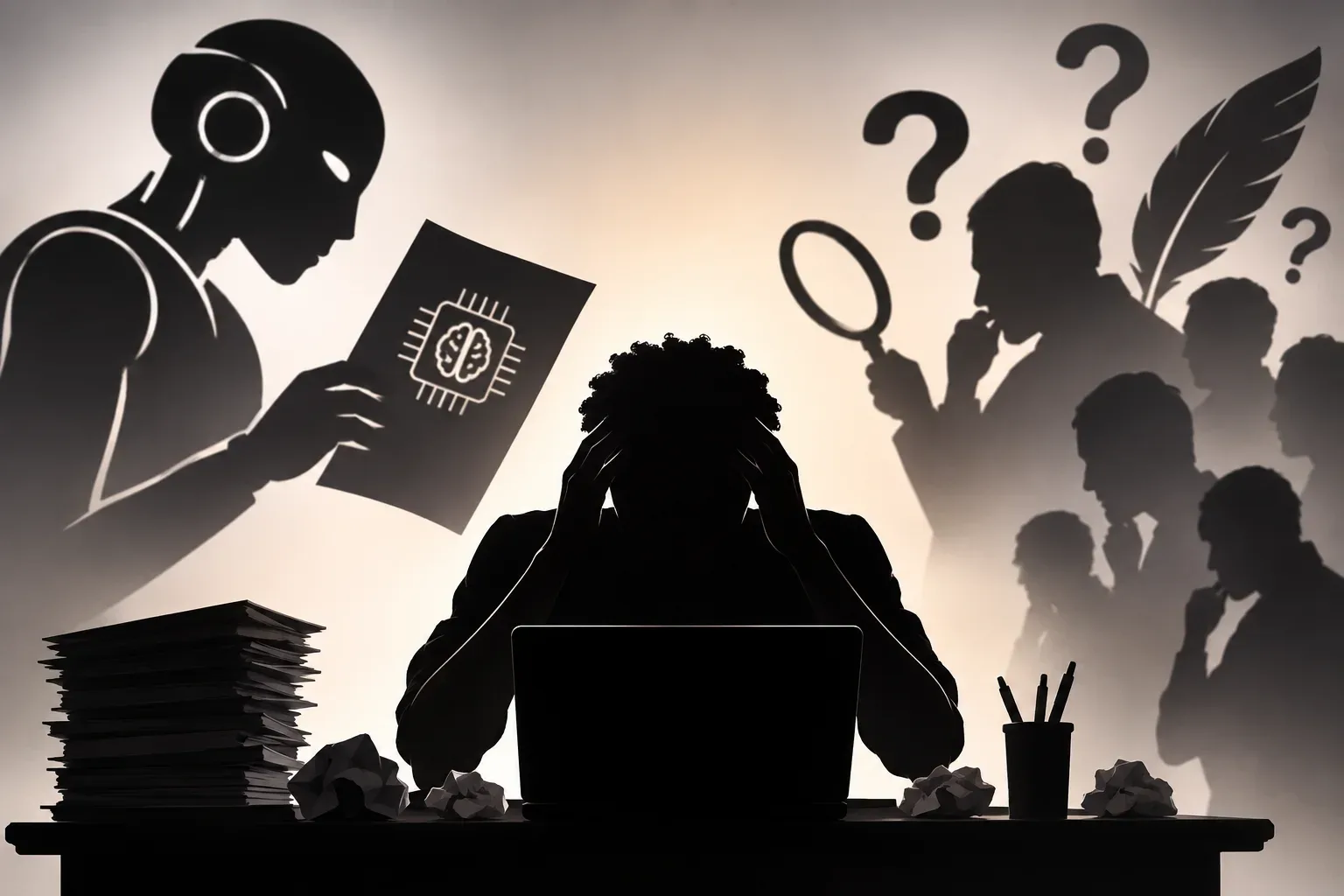
I have been asking myself if we, the humans, have lost touch with what human writing looks and feels like. And I have come to the conclusion that, not really, we haven’t. What we have in place is heightened suspicion of every good work put forward. AI is everywhere right now, and the biggest war I’ve seen so far is in writing: Academic and literary. I feel like the scrutiny on the use of AI in academia boiled over into fiction, and the standards by which academia was judged were carried over into fictional writing. So, when a writer uses specific punctuation, phrases or sentence structures, the flag is quickly raised: No way that is human. Even if the reader feels it is human, they have already been handed the blueprint with which to judge it, and this is what is leading to this paranoia, fetish and witch hunt within fictional writing. The obsession now is less with the craft and more with the calling out, which is leading writers to find different ways to try not to sound like AI. Which is funny because AI literally learns from humans!
And it is for the same reason that the writer shouldn’t prompt a story on some AI chatbot; the reader should also have to read a work and battle with the genius of it, and determine whether it is AI-generated. The reader should battle with the genius of it because the writer is no longer a storyteller but a guilty-till-proven-innocent convict on trial. The obsession is no longer with the theme but with the purity of the work. So, the writer, even though they have done their part, still has to fight the witch hunters and the AI-in-writing gatekeepers!
As a writer, I hold this biased view that AI should not be anywhere near creativity, and, in that same breath, it should not be anywhere near determining whether what one has written is AI-generated or not. I believe that there is the creative process, where the writer sits down and wrestles with the circumstances surrounding the characters, the choices made and how everything affects the trajectory of the story. I believe that is what touches the humanness in writing. If someone calls themselves a writer and wholly skips this process by prompting AI to do the whole of the work, then they are doing an injustice to writing. But if someone goes through all of this and asks AI for a grammatical clean-up, there is no fraud in it, really. In fact, there may be no case to answer.
And the writer should, in turn, come out and show evidence of their track record in writing that story, including the instances in which they may have used AI to do some grammatical clean-ups.
And that is another pointer to the writer: Make sure to always keep a record of drafts and writing plans because you might turn out so brilliant that some lazy body somewhere, with an AI detection tool, can only summarise that the human emotions you evoked could only from AI. This is what eventually saved Simbarashe. I, too, have my draft in WordPress, and I have the email correspondence with the editor and the whole editorial process.
And as I end this, let me pose: If someone sat down and drafted a whole story and then edited it with the help of an AI tool, does the story become less authentic? With the high costs of traditional publishing, what would this mean for self-publishing authors?
I hope I get a reply soon from the publishers and, hopefully, an opportunity to defend my story, even if it may miss out on that specific anthology. And once again, congratulations to Simbarashe.